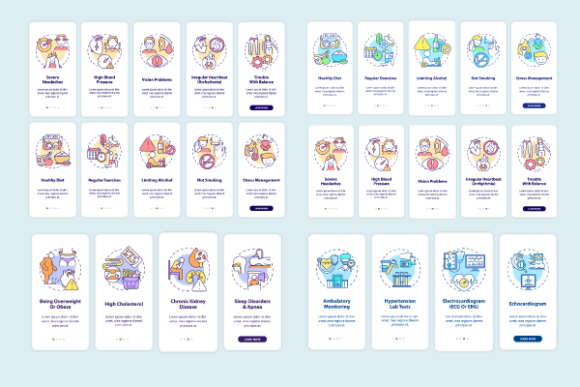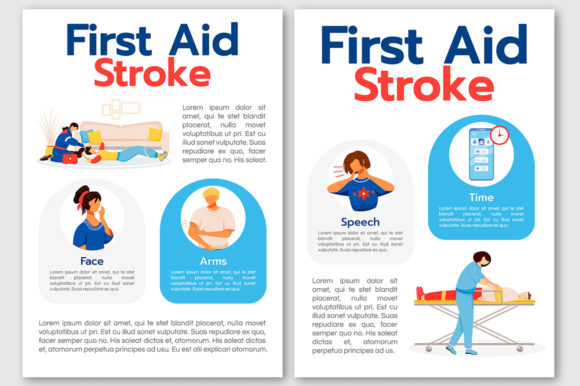
Reviewing First Aid for Stroke Flat Vector
As a designer who has spent years translating digital concepts into tangible, stitched realities, I approach every new asset with a mix of curiosity and skepticism. We often browse marketplaces looking for the perfect machine embroidery design, but we rarely stop to consider how a graphic template intended for print might translate to fabric. Today, I am evaluating First Aid for Stroke Flat Vector, not as a brochure layout, but as a potential visual foundation for modern embroidery projects. This is a deep dive into how this specific set of Graphic Templates can be repurposed by crafters, Etsy sellers, and apparel decorators to create meaningful, high-impact handmade products.
The Visual Personality and Initial Impressions
When I first opened the ZIP file containing First Aid for Stroke Flat Vector, my immediate observation was its clarity. The term "flat vector" suggests a minimalist aesthetic, devoid of unnecessary gradients or shadows. For an embroidery designer, this is music to our ears. Complex shading is a nightmare to digitize and even harder to stitch cleanly on textured fabrics. The clean lines and bold shapes in this collection suggest a design that prioritizes communication over decoration.
The theme—emergency medical help and stroke awareness—is serious, yet the "cartoon" and infographic style mentioned in the description softens the blow. It creates a mood that is educational rather than alarming. This balance is crucial when designing for public-facing items like tote bags or community health fair giveaways. The layout includes ample text space, which is a rare and valuable feature. In embroidery, negative space is just as important as the stitch itself. It allows the fabric to breathe and prevents the final piece from looking like a stiff, heavy patch of thread.
Translating Print Assets to Stitched Reality
It is important to clarify that First Aid for Stroke Flat Vector is primarily a set of Graphics and print templates. It is not a pre-digitized embroidery file. However, for those of us with digitizing software or access to a professional digitizer, these vectors are gold mines. They provide the perfect blueprint for creating custom applique design patterns or intricate fill stitch motifs.
I recently worked on a project for a local health nonprofit that needed branded merchandise for a awareness walk. They wanted something modern, not the typical clinical look. I used the structural elements from this vector pack to create a simplified emblem for a sweatshirt embroidery project. Because the original design uses flat colors and clear boundaries, it translated beautifully into satin and fill stitches. The result was a crisp, professional logo that held up well against the fleece texture of the garment.
For Etsy sellers and small shop owners, this versatility is key. You are not limited to one product type. The same core design can be scaled down for a embroidered patch or scaled up for a large back-piece on a jacket. The infographic elements can be broken apart and used as standalone icons for baby embroidery items, such as onesies or bibs, where simple, recognizable shapes are safer and more visually appealing than complex scenes.
Practical Applications in Real-World Projects
Let’s talk about where this design truly shines. The most natural fit is in the realm of educational and awareness-based merchandise. Consider a tote bag design for a pharmacy or a clinic. Using the flyer and booklet layouts as inspiration, you can arrange the icons and text spaces to create an informative front panel. When stitched with high-contrast thread colors, such as white on navy or red on khaki, the message becomes instantly readable.
Another excellent application is in custom apparel for medical professionals. Nurses and EMTs often look for personalized gear that reflects their specialty. A simplified version of the stroke awareness symbols, stitched onto a scrub cap or a pocket square, adds a touch of personal pride and professional identity. The flat vector style ensures that the design remains legible even when reduced in size for these smaller canvases.
For holiday embroidery or gift-giving, the context shifts slightly. While the medical theme is specific, the clean, infographic style can be adapted for general health-themed gifts. Imagine a personalized gift for a caregiver—a pillow cover or a kitchen towel featuring a subtle, stylized heart or health icon derived from the main vector set. It is a thoughtful nod to their role without being overly clinical.
Navigating Technical Challenges and Fabric Choices
While the design is strong, we must address the technical realities of stitching. Since this is a vector-based graphic template, you will need to digitize it yourself or hire someone to do so. This is where attention to detail is paramount. The "text space" mentioned in the product description is a double-edged sword. In print, small text is fine. In embroidery, tiny lettering is a recipe for frustration. If you plan to include text from the template, ensure it is large enough to be stitched with a running stitch or simple satin column without tangling.
Fabric texture plays a massive role here. On smooth cotton or polyester blends, the flat design will look sharp and modern. However, on textured fabrics like terry cloth towels or rough canvas, fine details may get lost. I recommend using a cut-away stabilizer for stretchy fabrics like t-shirts to prevent distortion. For woven fabrics like aprons or tote bags, a tear-away stabilizer might suffice, but always test on scrap fabric first.
Be cautious with hoop size limitations. If you are working with a standard 4x4 inch hoop, you will need to simplify the design significantly. The intricate infographic posters described in the template are better suited for larger hoops, such as 5x7 or 6x10, where you can maintain the integrity of the shapes without overcrowding the needle plate. Additionally, avoid placing dense stitch areas on curved surfaces like caps unless you have experience with cap frames and proper stabilization.
Enhancing Brand Value and Customer Trust
Using high-quality source materials like First Aid for Stroke Flat Vector elevates the perceived value of your finished product. Customers can tell when a design is crisp and well-thought-out. For commercial embroidery clients, presenting a printable mockup based on these vectors before stitching begins helps manage expectations and builds trust. It shows that you are not just guessing; you are designing with intent.
For craft business owners, consistency is brand currency. By adapting a single vector theme across various products—patches, shirts, bags—you create a cohesive collection. This recognition factor drives buyer engagement. Whether you are selling at a craft fair or online, a unified aesthetic makes your booth or shop look professional and curated.
Essential Designer Notes for Success
- Test Before You Commit: Always stitch out a sample on the actual fabric you plan to use. Check for puckering or thread breaks.
- Contrast is King: Review your design in black and white. If the shapes do not stand out in grayscale, they will not stand out in thread. Choose thread colors that contrast sharply with the fabric.
- Check Licensing: Since this is a graphic template, confirm the license terms. Ensure you have the right to use the vector assets for commercial physical goods if you plan to sell the embroidered items.
- Simplify for Stitching: Reduce the number of color changes where possible. Each color change adds time and potential weak points in the design.
- Consider the End Use: If the item will be washed frequently, like a tea towel or baby clothes, use high-quality rayon or polyester threads that resist fading and abrasion.
In conclusion, First Aid for Stroke Flat Vector is a versatile resource for the modern embroidery designer. It bridges the gap between informational graphics and wearable art. By understanding its strengths and respecting the limitations of the embroidery medium, you can transform these digital assets into impactful, high-quality handmade product offerings that resonate with customers and stand the test of time.