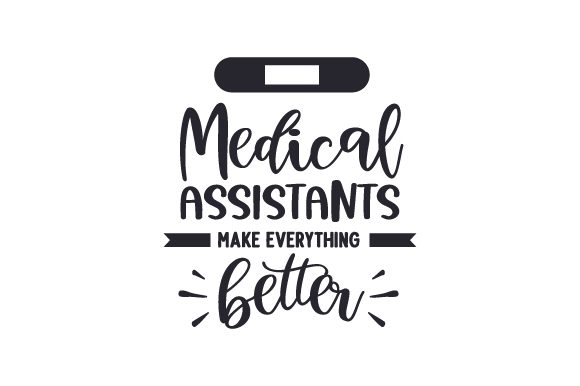
Review: Medical Assistants Make Everything Better Design
As a designer who has spent countless hours digitizing and testing patterns for real-world application, I approach every new machine embroidery design with a critical eye. It is not enough for a graphic to look good on a screen; it must hold up under the needle, survive the wash cycle, and resonate with the end user. Recently, I evaluated the Medical Assistants Make Everything Better design to determine its viability for commercial and personal projects. This piece sits squarely in the Medical niche, a category that demands both professionalism and warmth. Here is my practical assessment of how this asset performs in actual embroidery project scenarios.
First Impressions and Visual Personality
The immediate appeal of Medical Assistants Make Everything Better lies in its balanced tone. It avoids the sterile coldness often associated with healthcare imagery while steering clear of overly cartoonish elements that might undermine professional credibility. The layout suggests a clean, readable composition, which is crucial when working with text-based designs. In the context of Crafts, clarity is king. If the message gets lost in dense stitching or poor spacing, the product fails.
The visual personality here is supportive and appreciative. It creates a mood of gratitude, making it an ideal candidate for gifts from patients, colleagues, or healthcare administrators. When I visualize this stitched out, I see a design that relies on strong legibility rather than intricate, fragile details. This is a smart approach for a broad audience, ensuring the message remains the focal point regardless of the substrate.
Real-World Application: The Custom Tote Scenario
To truly test the versatility of this design, I imagined a specific use case: creating a high-quality, personalized gift for a nursing student graduating into their first role as a medical assistant. I selected a heavy canvas tote bag design as the base product. Canvas provides a stable surface that handles stitch density well, reducing the risk of puckering.
In this scenario, the Medical Assistants Make Everything Better motif would be centered on the front panel. Using a contrasting thread color against a neutral bag color—such as navy thread on cream canvas—would maximize visibility. The design’s structure appears robust enough to handle the texture of canvas without losing definition. For an Etsy seller or small shop product creator, this type of application is highly marketable. It transforms a generic utility item into a meaningful personalized gift that celebrates a specific career milestone.
Beyond totes, this design translates effectively to sweatshirt embroidery. A crewneck sweatshirt in heather grey or clinical blue serves as a perfect backdrop. The softness of the fleece requires careful attention to stabilizer choice, but the resulting product is cozy, wearable, and proud. It becomes a uniform-adjacent piece that staff can wear during casual Fridays or off-duty hours, fostering team spirit.
Technical Considerations for Stitching
While the concept is strong, the execution depends heavily on technical preparation. Since the provided formats include SVG, Transparent PNG, EPS, and DXF, it is important to note that these are primarily vector and image files. For machine embroidery, you will likely need to ensure you have the correct digitized file formats compatible with your specific machine, or use software to convert these vectors into stitch data if they are not already provided as native embroidery files. Always verify the digital embroidery file specifications before purchasing or downloading.
When preparing to stitch, consider the stitch density. Text-heavy designs can become stiff if the fill stitches are too dense. I recommend reviewing the pathing to ensure there are adequate tie-offs and jump stitches minimized. For smaller items like caps or baby clothes, scaling down the design requires caution. Tiny lettering can blur if the hoop size is too small relative to the detail level. Always run a test stitch on scrap fabric of the same weight and texture as your final product.
Stabilizer selection is non-negotiable here. For stretchy fabrics like t-shirts or knit scrubs, a cut-away stabilizer is essential to prevent distortion over time. For woven fabrics like aprons or pillow covers, a tear-away may suffice, but a light fusible backing can add extra crispness to the edges of the letters. If you are attempting this on dark fabric, consider using a white or light-colored underlay to make the top thread colors pop, ensuring the message "Medical Assistants Make Everything Better" remains sharp and readable.
Navigating Fabric and Surface Challenges
Not every surface is created equal. While this design shines on flat, stable materials, curved surfaces like baseball caps present a challenge. The curvature can distort text, making it appear arched or uneven. If you are producing custom apparel for a clinic, stick to flat panels of uniforms or jackets where the design can lay completely flat. Similarly, avoid placing this design on highly textured fabrics like thick terrycloth towels unless you use a topping stabilizer to keep the stitches from sinking into the pile.
For baby embroidery projects, such as onesies or bibs, ensure the thread used is soft and non-irritating. The design should be scaled appropriately so it does not cover the entire garment, allowing the fabric to remain flexible and comfortable against sensitive skin. In these cases, a simpler satin stitch border might be preferable to complex fill stitches to reduce bulk.
Commercial Value and Brand Consistency
For craft business owners and commercial embroidery professionals, the value of this design lies in its niche specificity. Healthcare workers are a dedicated demographic that appreciates recognition. By offering products featuring Medical Assistants Make Everything Better, you tap into a market driven by pride and identity. Whether it is an embroidered patch for a badge reel or a full-front chest logo on a jacket, the design reinforces a sense of belonging.
Consistency is key. If you are building a line of medical-themed goods, ensure that the thread colors you choose align with common medical scrubs and branding—think teal, navy, ceil blue, and burgundy. This creates a cohesive look across your design assets and helps buyers visualize the finished product in their daily work environment. High-quality presentation, including clear printable mockup images that show the texture of the stitches, builds customer trust and increases conversion rates.
Final Verdict and Designer Notes
The Medical Assistants Make Everything Better design is a solid addition to any portfolio focused on healthcare appreciation. It is versatile, emotionally resonant, and technically manageable for intermediate to advanced embroiderers. However, success depends on respecting the limitations of the medium. Do not rush the setup. Check your license terms to confirm whether the design allows for commercial sales of physical items. Test your tension settings. Choose your fabrics wisely.
By treating this design with the respect it deserves—acknowledging the hard work of medical assistants through high-quality craftsmanship—you create more than just a product. You create a token of appreciation that stands the test of time. Whether for a holiday gift, a retirement present, or a boutique inventory staple, this design delivers when handled with professional care.